Understanding tree mulching vs forestry mulching helps Calgary landowners choose the right approach based on vegetation density, not terminology. Tree mulching suits light maintenance, while forestry mulching handles dense, unmanaged growth. Focusing on land condition leads to better results and longer-lasting vegetation control.
- Blog
- Tree Mulching vs Forestry Mulching: Key Differences Explained
Tree Mulching vs Forestry Mulching: Key Differences Explained
If you own land in or around Calgary, you may hear the terms tree mulching and forestry mulching used as if they mean the same thing. This confusion is common, especially when landowners are trying to decide how to deal with overgrown areas, brush, or unused sections of their property. This guide explains Tree mulching vs forestry mulching in clear, practical terms. It focuses on how each method works, what problems they solve, and how Calgary landowners can make decisions based on land condition rather than terminology or sales language.
Key Takeaways
- Tree mulching and forestry mulching are not the same, even though the names sound similar.
- The right method depends on vegetation density, not property size.
- Tree mulching is best for routine maintenance and light growth.
- Forestry mulching is designed for dense, unmanaged, or overgrown land.
- Choosing the wrong method can lead to faster regrowth or repeat clearing.
Before choosing a service, assess how dense and unmanaged your vegetation is. The condition of the land matters more than the name of the service.
Are Tree Mulching and Forestry Mulching the Same Thing?
No, tree mulching and forestry mulching are not the same service, even though the names are often used interchangeably. Both fall under land clearing methods, but they are designed for very different levels of vegetation and land conditions.
Why They Are Often Confused
- Both methods cut vegetation and leave mulch behind.
- Both are used for clearing land without hauling debris away.
- The word mulching makes them sound identical.
Because of these similarities, many people assume the results are the same, which is not always true.
The real difference comes down to how deep the clearing goes and what type of vegetation each method is meant to handle. Understanding this distinction helps landowners avoid choosing a method that does not fully solve their problem.
Why These Terms Are Often Used Interchangeably in Calgary
In Calgary, these terms are often mixed together in everyday conversation. Landowners, contractors, and even online listings may use whichever term feels familiar, without always separating the technical meaning.
This does not usually come from an attempt to mislead. It is more about simplified language. Many people describe any mulching-based clearing as “forestry mulching,” even when the work is closer to basic tree mulching.
Because Calgary includes both residential properties and rural land, the same words get used across very different situations. That makes it even more important for landowners to look at what the service actually does, not just what it is called.
What Tree Mulching Is Designed to Do
Tree mulching is designed for surface-level clearing and regular upkeep. It works well on land that already receives some maintenance or where vegetation has not become overly dense.
This method is commonly used for property maintenance, clearing small trees, trimming back brush, and keeping land accessible. It helps manage growth without dramatically changing the landscape.
For many residential properties, tree mulching is enough to control brush removal and keep outdoor spaces usable. It focuses on maintaining rather than reclaiming land.
A common example is routine lot care or edge clearing near driveways, paths, and property boundaries. This type of work is usually handled through ongoing tree mulching, helping keep areas tidy and accessible without turning it into a major land-clearing project.
What Forestry Mulching Is Meant to Handle
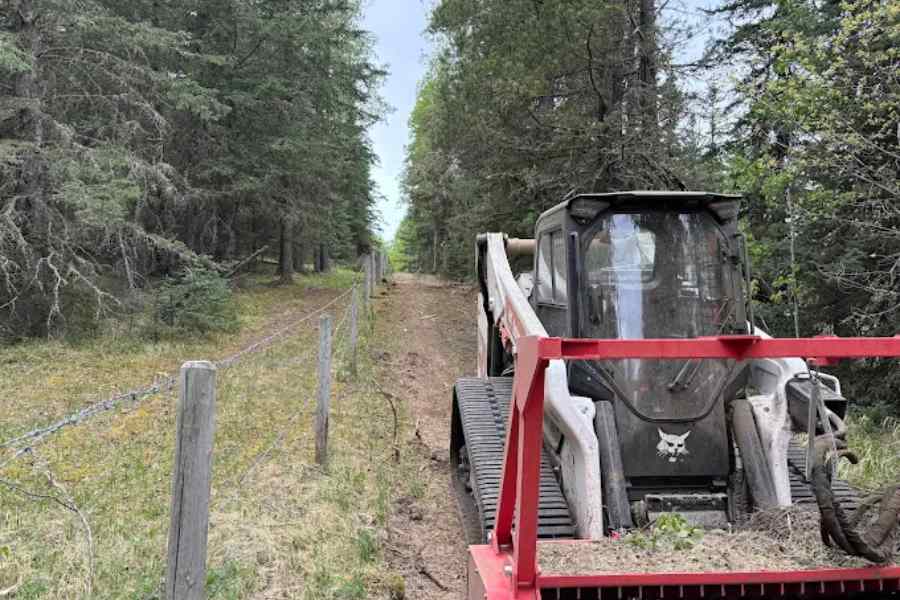
Forestry mulching is designed for land that has grown thick, unmanaged, or difficult to access. It is used when vegetation has gone beyond light maintenance and needs deeper clearing.
This method is common in wooded areas, large rural lots, and properties where thick brush or small trees have taken over. Forestry mulching breaks vegetation down closer to the ground, making it useful for reclaiming land that has not been maintained for years.
It is not meant to be the default option for every property. Instead, it fits situations where land preparation or deeper vegetation control is required.
Tree Mulching vs Forestry Mulching (Key Differences That Matter)
Type of Vegetation Each Method Handles
The main difference between these methods is the type and density of vegetation they can handle. Tree mulching works best on lighter growth, smaller trees, and areas where vegetation is not packed tightly together.
Forestry mulching is better suited for overgrown land where invasive plants, dense brush, or long-neglected growth are present. Choosing the right method depends on how heavy the vegetation is, not the size of the property alone.
Depth of Clearing and Regrowth Control
Another difference is how deep each method clears vegetation. Tree mulching focuses on surface-level clearing, which is often enough for maintenance but may allow faster regrowth in unmanaged areas.
Forestry mulching goes deeper into vegetation, helping reduce regrowth by breaking down material closer to the ground. This makes it more suitable for long-term vegetation control when land has been neglected.
Equipment Used and Land Impact
Both methods rely on equipment-mounted mulchers, but the machines are set up differently depending on the task. Lighter equipment is used for tree mulching, while forestry mulching requires heavier machinery to handle denser growth.
The goal in both cases is to manage land impact carefully. Proper mulching avoids unnecessary disturbance while still clearing vegetation effectively.
Soil Protection, Erosion Control, and Environmental Impact
One concern many landowners have is whether mulching damages soil. In reality, mulching often helps protect soil rather than harm it.
The layer of mulch left behind helps with soil protection and erosion control by reducing exposed ground. This can be especially useful in areas where weather and runoff affect land stability.
According to general land management guidance from Natural Resources Canada, minimizing soil disturbance helps maintain healthier ground conditions. Mulching supports this by avoiding large-scale removal and leaving organic material in place.
Choosing the Right Method for Your Calgary Property
The right choice depends on land condition, not terminology. Residential properties often benefit from tree mulching because the vegetation is lighter and maintenance-focused.
Rural land or larger properties may need forestry mulching when growth becomes dense or unmanaged. Acreage maintenance, access preparation, and land preparation goals all play a role in deciding which method makes sense.
By focusing on vegetation type, regrowth concerns, and future land use, Calgary landowners can make clearer decisions without getting stuck on labels.
FAQs
How often does land need to be mulched after tree mulching or forestry mulching?
Landowners want to know if this is a one-time solution or ongoing maintenance. This question comes up once they understand the difference but are thinking long-term.
Can tree mulching or forestry mulching be done year-round in Calgary?
After understanding the methods, users start wondering about seasonal limitations, especially with Calgary’s weather and ground conditions.
Will mulching completely remove tree stumps and roots?
The article explains depth differences, but readers still want clarity on what remains underground and whether additional work is needed.
Is forestry mulching suitable near fences, buildings, or utility lines?
Once landowners realize forestry mulching is more aggressive, they naturally worry about safety, precision, and nearby structures.
How long does it take to see regrowth after mulching?
Even after learning about regrowth control, readers want a time-based expectation, not just a conceptual explanation.