- Blog
- Forestry Mulching vs Traditional Land Clearing
Forestry Mulching vs Traditional Land Clearing
Final Thoughts
Every property is different, especially around Calgary where terrain and vegetation vary from flat pasture to dense brush. A careful evaluation of soil condition, slope, and long-term goals makes the decision clearer.
If you want guidance based on real site conditions, New West Contracting can help you assess your land and determine the most practical approach for your project.
- 587-894-1975
- Dan@newwestcontracting.ca
Key Takeaways
- Forestry mulching grinds vegetation in place, while traditional clearing removes trees and roots completely.
- Mulching typically causes less soil disturbance, which can help preserve topsoil and reduce erosion.
- Traditional mechanical clearing is often better suited for construction, grading, and foundation preparation.
- Debris handling is a major difference. Mulching leaves organic material on-site, while traditional clearing may require hauling.
- The best method depends on your long-term land use goals, not just short-term cost.
Before choosing a clearing method, walk your property after rainfall. Areas that hold water or erode easily may benefit more from low-disturbance options like mulching.
Understanding the Two Main Land Clearing Methods
How Forestry Mulching Works
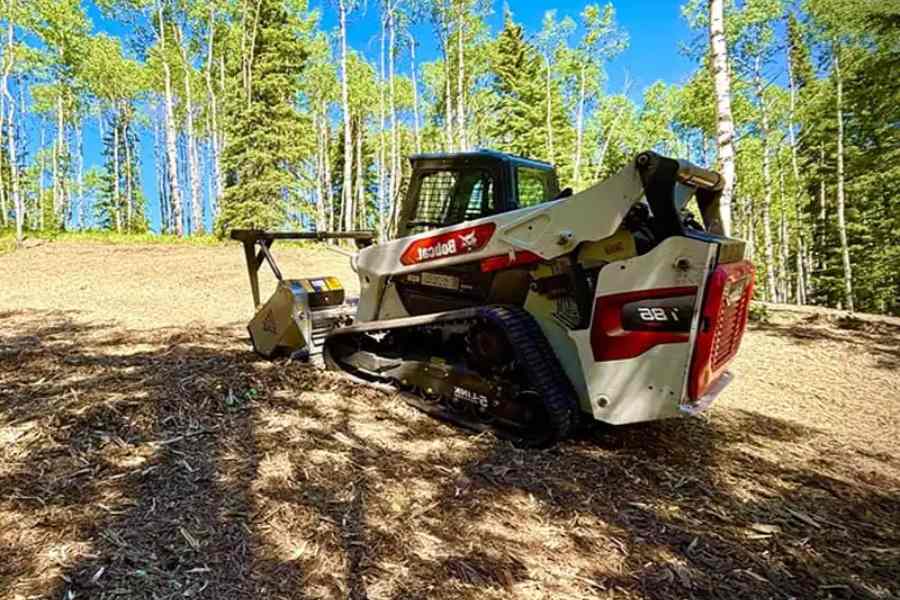
Forestry mulching uses a specialized machine, often a skid steer mulcher or tracked unit, with a rotating drum fitted with cutting teeth. The machine grinds brush, shrubs, and small trees into fine mulch.
Instead of removing debris, the organic material is left on-site as an organic mulch layer. Roots usually remain in the ground, which reduces root system removal and limits deep soil disruption.
This process combines cutting and debris handling in one step.
How Mechanical Land Clearing Works
Mechanical land clearing uses heavy equipment clearing methods such as excavators and bulldozers. Trees are pushed over or dug out. In many cases, stump grinding process work or full root extraction follows.
Debris is typically piled, burned where permitted, or hauled away. Excavator land clearing is common for construction preparation or when full removal is required.
Both services aim to remove unwanted vegetation. The difference is how they treat roots, soil, and debris.
Key Differences in Soil Disturbance and Debris Handling
Soil Disturbance Comparison
Soil disturbance comparison is one of the biggest concerns for rural landowners.
Forestry mulching works at ground level. Because roots stay in place, the soil structure is less disturbed. This supports topsoil preservation.
Mechanical clearing often involves digging, pushing, and grading. According to land management studies, heavy excavation can significantly disturb upper soil layers. When topsoil is displaced, erosion risk increases, especially on sloped land.
In simple terms, less digging usually means less long-term soil disruption.
What Happens to Vegetation and Debris
With mulching, vegetation becomes ground cover. The mulch layer helps reduce bare soil exposure and supports erosion control practices.
With traditional clearing, debris hauling requirements increase. Piles must be managed, transported, or disposed of according to local regulations.
If you want minimal cleanup afterward, mulching may reduce that step.
Environmental Impact and Vegetation Management Methods
Calgary’s rural properties often include mixed grasses, shrubs, and small tree growth. The environmental impact of land clearing depends on how much disruption occurs.
Selective vegetation management methods, like forestry mulching, reduce surface vegetation density without completely uprooting the land. This approach supports invasive vegetation control while leaving root systems to stabilize soil.
Wildfire mitigation programs across Alberta commonly focus on wildfire fuel reduction. Reducing surface brush lowers fire intensity and spread potential. Forestry mulching benefits include breaking up fuel continuity while maintaining soil coverage.
Mechanical clearing can also be appropriate but tends to leave soil exposed if not followed by grading or reseeding.
Cost and Efficiency Considerations for Rural Properties
Cost comparison land clearing discussions often focus on hourly rates. But cost is usually shaped by project logistics.
Forestry mulching combines cutting and debris processing in one step. That can reduce equipment mobilization and hauling expenses.
Mechanical land clearing may require multiple machines, trucks, and disposal planning. If debris must be transported off-site, overall expenses can increase.
Efficiency also depends on site accessibility. Dense brush on accessible terrain may be handled quickly with mulching. Large trees requiring root extraction may require traditional equipment.
Rather than asking which is cheaper overall, it is more accurate to ask which suits your acreage cleanup goals.
When Traditional Clearing Makes More Sense
Forestry mulching is not always the right choice.
If you are preparing for foundations, underground utility installation, or major grading requirements, full root removal may be necessary. Construction site clearing often requires a stable, debris-free base.
In these cases, mechanical land clearing supports site preparation for development.
Removing root systems can improve foundation stability where heavy structures are planned.
The key is matching the method to the intended land use.
Choosing the Right Approach for Calgary Acreages
Terrain and Vegetation Factors
Calgary-area properties vary widely. Some acreages are flat pastureland. Others have slopes, heavy brush, or mixed vegetation.
A vegetation density assessment helps determine whether brush removal techniques like mulching are enough or if full extraction is required.
Slope matters too. On uneven terrain, reducing soil disturbance may help maintain stability.
Long-Term Land Use Goals
Are you planning pasture restoration? Building? Improving access roads?
For overgrown acreage cleanup and ongoing rural land development, mulching often supports gradual land improvement.
For permanent structural builds, traditional clearing may be necessary.
If you are considering professional forestry mulching in Calgary, you can learn more about available options and expert support from New West Contracting to find the right approach for your land goals.
Which Method Should You Choose?
There is no single answer in the forestry mulching vs traditional land clearing decision. The right choice depends on what you want your land to become.
If your goal is brush control, improved access, pasture restoration, or ongoing vegetation management with minimal soil disruption, forestry mulching is often the better fit. It keeps root systems in place, reduces erosion risk, and avoids large debris piles.
For many Calgary acreages with moderate overgrowth, this approach balances efficiency and land protection.
If your goal is construction, major grading, or installing foundations and underground utilities, traditional mechanical clearing may be necessary. Full root removal creates a clean base for development and ensures long-term structural stability.
In simple terms, choose the method that matches your end use. Think about how the land will function five years from now, not just how it looks immediately after clearing.
FAQs
How do weather and seasonal conditions affect land clearing?
Frozen ground in winter can reduce soil compaction from heavy equipment, while wet spring conditions may increase soil disturbance. Dry seasons can improve efficiency but may also raise dust and fire risk considerations. Timing can influence both cost and environmental impact.
How long does a typical acreage clearing project take?
Project timelines depend on acreage size, vegetation density, terrain slope, and equipment access. A few acres of brush may take a day or two, while heavily treed or uneven land may require more time. Site conditions matter more than method alone.
Will vegetation grow back after forestry mulching?
Yes, regrowth is possible because root systems often remain intact. However, mulching significantly reduces surface vegetation and can slow regrowth. Long-term vegetation management may require periodic maintenance depending on land use goals.
Can land clearing improve property value?
Clearing overgrown land can improve accessibility, usability, and development potential. While it does not automatically increase value, well-managed acreage often becomes more attractive to buyers looking for usable rural property.
Is one method safer for wildlife habitats?
Both methods affect local ecosystems differently. Selective clearing tends to preserve more ground structure, while full extraction creates larger habitat changes. Responsible planning and phased clearing can reduce disruption to wildlife.
Do I need permits for land clearing in Calgary?
Permit requirements depend on property zoning, tree protection bylaws, and environmental regulations. Some rural areas may allow basic vegetation removal without permits, while larger clearing projects or work near water bodies may require approval. It is always best to confirm with local municipal authorities before starting.