- Blog
- How Low Impact Land Clearing Works in Calgary
How Low Impact Land Clearing Works in Calgary
Final Thoughts
Clearing dense vegetation does not have to come at the cost of damaging your land. By focusing on soil protection, erosion prevention, and minimal disturbance, you can maintain long-term land quality.
The value of low impact land clearing lies in its ability to protect soil while achieving effective results.
For property owners in Calgary, working with experienced providers like New West Contracting ensures the right approach is used. You can also explore Forestry Mulching as a practical method for this type of clearing.
- 587-894-1975
- Dan@newwestcontracting.ca
Key Takeaways
- Soil protection is critical during vegetation clearing.
- Low impact methods reduce long-term land damage.
- Helps prevent erosion and maintain soil stability.
- Keeps land usable after clearing.
- Suitable for different property types in Calgary.
Tip: Avoid clearing when soil is overly wet, as machinery can compress the ground, leading to long-term drainage problems and reduced soil productivity.
Understanding Low Impact Land Clearing and Soil Protection Methods
Low impact clearing focuses on removing vegetation without disturbing the soil beneath. Instead of digging or stripping the land, it works at the surface level.
This approach helps preserve soil layers that are essential for drainage, stability, and future use. It also keeps nutrients within the soil instead of exposing them to erosion.
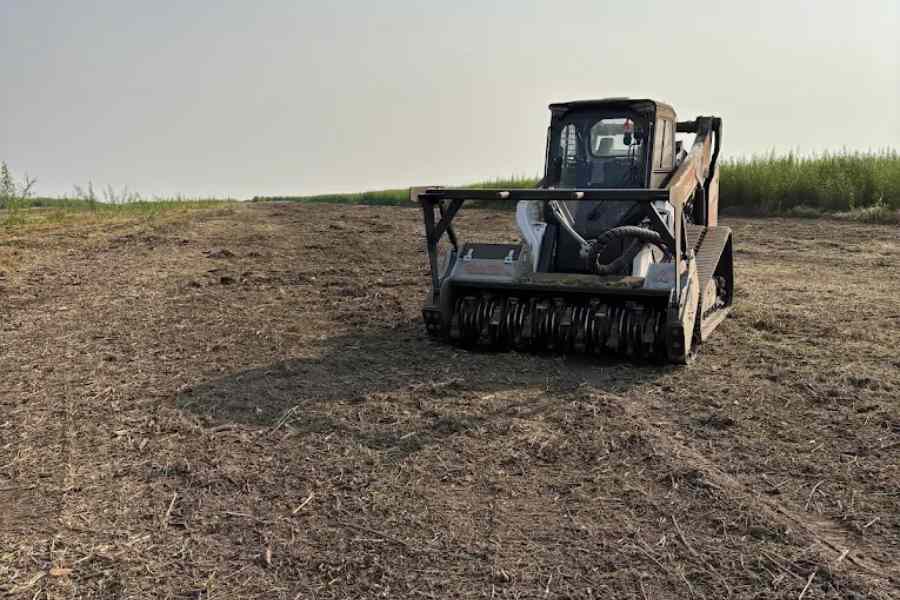
Simple methods like cutting and mulching vegetation allow the land to stay intact while still achieving clearing goals.
How Traditional Clearing Leads to Ground Disturbance and Soil Damage
Traditional land clearing often involves heavy machinery, excavation, and removal of vegetation along with soil layers. This process can disturb the natural structure of the ground.
When soil is compacted, it loses its ability to absorb water. This leads to runoff, erosion, and reduced land usability. In fact, compacted soil can reduce water absorption by up to 50 percent.
This is why ground disturbance control and land disturbance reduction are important when planning any clearing work.
Root System Preservation and Minimal Surface Disruption Benefits
Roots play a major role in keeping soil stable. When roots are removed completely, soil becomes loose and more likely to erode.
Low impact methods focus on root system preservation and minimal surface disruption. This helps maintain the natural structure of the land even after clearing.
By keeping roots in place, the soil stays compact enough to remain stable while still allowing water to pass through properly.
Erosion Prevention Techniques and Moisture Retention in Soil
Preventing Soil Erosion During Clearing
When land is left exposed after clearing, rain and wind can easily remove topsoil. This reduces land quality and increases maintenance needs.
Maintaining Soil Moisture Naturally
Keeping organic material on the ground helps retain moisture. It reduces evaporation and keeps soil healthier for longer.
Using erosion prevention techniques ensures that soil stays in place and continues to support future land use.
Eco Safe Clearing Approaches and Sustainable Clearing Practices
Low Impact Methods Used in Calgary
In Calgary, clearing methods are adapted to local soil and terrain conditions. This helps reduce unnecessary damage.
Balancing Clearing and Environmental Protection
The goal is not to remove everything, but to manage vegetation while protecting the land.
Using eco safe clearing approaches and sustainable clearing practices helps maintain balance between clearing and environmental responsibility.
Property Types in Calgary That Benefit from Low Impact Clearing
Low impact clearing works well for different types of land. This includes acreages, wooded properties, and overgrown lots.
These areas often require clearing without damaging the soil, especially when future use is planned.
Using land disturbance reduction methods ensures the land remains stable and usable after clearing.
Is Low Impact Land Clearing the Right Choice for Your Property?
If your goal is to clear vegetation while keeping your land in good condition, then this approach is worth considering.
Signs like dense overgrowth, poor access, or early erosion indicate the need for clearing that protects soil.
For Calgary property owners, low impact land clearing offers a practical solution that balances clearing with long-term land health.
FAQs
Can Low Impact Clearing Be Used For Construction Preparation?
Yes, it can prepare land while preserving soil structure. This makes it easier to build later without needing major soil correction work.
Does Low Impact Clearing Work On Sloped Land?
Yes, it is often preferred for sloped areas because it reduces erosion risk and helps maintain soil stability during and after clearing.
How Long Does It Take To See Benefits In Soil After Clearing?
In many cases, soil stability and moisture retention improve immediately, while long-term benefits develop over time as organic material breaks down.
Is Low Impact Clearing Suitable For Small Residential Properties?
Yes, it works for both small and large properties, especially where soil protection and minimal disturbance are important.
Can This Method Help With Future Landscaping Projects?
Yes, preserving soil structure makes it easier to plan landscaping without needing additional soil repair or preparation.
Does Low Impact Clearing Reduce Maintenance In The Future?
Yes, by preventing soil damage and erosion, it reduces the need for repeated repairs and ongoing land maintenance.