- Blog
- When Forestry Mulching Is the Right Choice for Land Clearing
When Forestry Mulching Is the Right Choice for Land Clearing
Final Thoughts
Understanding When Forestry Mulching Is the Right Choice for Land Clearing helps property owners avoid unnecessary work and costs. Forestry mulching offers an efficient and environmentally responsible solution when land conditions align with its strengths. By evaluating vegetation density, terrain, and long-term goals, property owners can determine whether mulching is the most practical approach.
- 587-894-1975
- Dan@newwestcontracting.ca
Key Takeaways
- Forestry mulching works best for properties with dense vegetation and uneven terrain.
- It minimizes soil disturbance while improving property accessibility.
- Not every land clearing project is suited for mulching.
- Understanding land conditions helps avoid unnecessary costs.
- Mulching supports long-term land maintenance and regrowth control.
“Forestry mulching is not always the right solution, but when conditions are right, it can be one of the most efficient and environmentally responsible ways to clear land.”
When to Use Forestry Mulching for Land Clearing
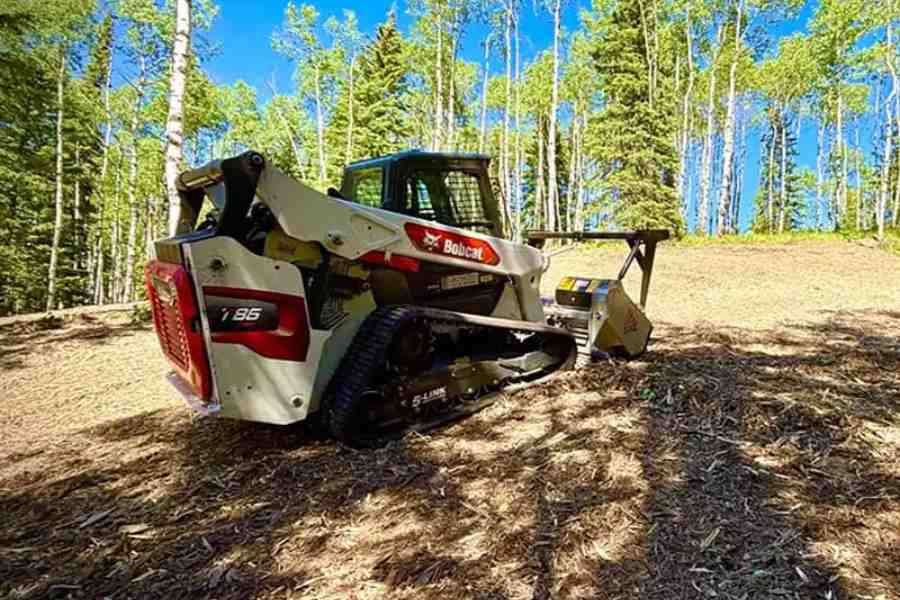
Knowing when to use forestry mulching starts with understanding the type of vegetation on the property. Mulching is well suited for areas with unwanted brush and trees, saplings, and thick undergrowth that make access difficult. The process uses heavy-duty mulching equipment to grind vegetation into mulch, which stays on the soil surface.
This method is particularly useful when landowners want to improve property accessibility without stripping away topsoil. Mulching also reduces cleanup requirements because debris is processed on-site rather than hauled away.
Forestry Mulching for Land Clearing Projects: When It Makes Sense
Forestry mulching for land clearing projects is often the right choice for acreage and large properties where traditional clearing methods would require extensive debris removal. It works well for right-of-way preparation, fence lines, and properties being prepared for future development.
Mulching is also beneficial when minimal ground disturbance is a priority. By leaving mulch behind, the soil surface remains protected, which helps with erosion prevention and regrowth control. In many Calgary-area projects, property owners choose mulching to balance efficiency with environmental responsibility.
Property and Land Conditions Where Forestry Mulching Works Best
Forestry mulching performs best on properties with uneven or rough terrain where traditional equipment may struggle. It is effective on land with mixed vegetation density and areas where selective clearing is required rather than complete removal.
This method supports land restoration goals by improving soil conditions over time. Mulched material decomposes naturally, contributing to organic matter that supports long-term land use.
Environmental Benefits and Long-Term Land Management Advantages
One of the main advantages of forestry mulching is soil surface protection. By keeping mulch on the ground, the process helps reduce soil disturbance and supports environmentally friendly land clearing practices.
Mulching also aids long-term land management by limiting rapid regrowth and improving moisture retention. These benefits make forestry mulching a practical choice for properties that require ongoing maintenance rather than repeated clearing.
When Forestry Mulching May Not Be the Best Option
Forestry mulching is not ideal for every situation. Properties that require complete vegetation removal or major grading may need alternative methods. Mulching may also be less suitable when regulatory requirements demand full debris disposal or when land preparation involves deep excavation.
In these cases, other land clearing approaches may better support preparation for future development or specific construction needs.
FAQs
What are the disadvantages of mulching for land clearing projects?
Mulching may not fully remove vegetation roots and may not suit projects requiring complete land stripping. It can also be less effective when major grading is needed.
When is forestry mulching not the right choice for clearing land?
It may not be suitable for sites requiring full debris removal or heavy soil reshaping.
What are the main downsides property owners should know before mulching land?
Property owners should understand that mulching focuses on surface clearing and long-term management rather than complete removal.
Is mulching always necessary when clearing overgrown land?
No. The necessity depends on land conditions, future use, and environmental priorities.
What are the alternatives to forestry mulching for land clearing?
Alternatives include mechanical clearing, excavation, or brush cutting, depending on project goals.